Customer Profile
U.S. Space Force
United States Space Force
The U.S. Space Force is the U.S. military service responsible for organizing, training, and equipping space forces. It was established December 20, 2019. Its FY2026 requested budget totals $39.9 billion, with $26.1 billion discretionary and $13.8 billion mandatory.
Space Force programs have awarded Rocket Lab multiple launch task orders and prime spacecraft contracts. Key examples include a $14.49 million Electron task order for STP-S30 2 and an $816 million contract for 18 TRKT3 satellites 1. Neutron was on-ramped to the $5.6 billion NSSL Phase 3 Lane 1 program 3. Investors should monitor cadence of Electron and HASTE missions plus SDA production milestones.
Investment Thesis
The U.S. Space Force is the U.S. military service responsible for organizing, training, and equipping space forces. It was established December 20, 2019. Its FY2026 requested budget totals $39.9 billion, with $26.1 billion discretionary and $13.8 billion mandatory.
Space Force programs have awarded Rocket Lab multiple launch task orders and prime spacecraft contracts. Key examples include a $14.49 million Electron task order for STP-S30 2 and an $816 million contract for 18 TRKT3 satellites 1. Neutron was on-ramped to the $5.6 billion NSSL Phase 3 Lane 1 program 3. Investors should monitor cadence of Electron and HASTE missions plus SDA production milestones.
Key Differentiators
- • Launch volume: Six verified Rocket Lab missions completed between 2019 and February 2026, all successful.
- • Prime contractor role: $816 million award to build 18 Tracking Layer satellites 1 plus $515 million T2TL award.
- • NSSL eligibility: Neutron added to $5.6 billion Phase 3 Lane 1 IDIQ vehicle 34.
Risk Factors
- • Budget execution: FY2026 request of $39.9 billion faces congressional appropriation risk.
- • Launch manifest concentration: Multiple classified NROL missions create single-customer dependency for certain manifests.
- • Neutron schedule: First launch targeted for 2026; any delay affects NSSL eligibility utilization.
Rocket Lab Relationship
U.S. Space Force accounts for six Rocket Lab launches through February 2026. Missions comprise four Electron NROL classified flights, one STP-S30 science mission, and one HASTE suborbital hypersonic test. All six launches succeeded. The relationship spans dedicated small-launch services and suborbital test capacity.
Additional revenue flows from spacecraft manufacturing. Space Force's SDA awarded Rocket Lab $1.331 billion combined for T2TL and TRKT3 satellite constellations. Neutron eligibility in the $5.6 billion NSSL Phase 3 Lane 1 program opens medium-lift national security opportunities. Investors should track HASTE repeat rate, SDA satellite delivery milestones, and Neutron upper-stage development progress under the $24.35 million contract.
Business Model
Revenue is generated through government appropriations allocated to launch services, satellite production, and technology prototyping. Space Force procures Electron launches via task orders such as the $14.49 million STP-S30 award and HASTE flights under DIU-managed programs. Spacecraft revenue includes firm-fixed-price contracts for SDA constellation layers.
Commercialization stage is mature for launch and satellite manufacturing. Recurring launch demand and multi-year satellite production contracts provide visibility. Capital intensity remains high for Neutron development and constellation scaling.
Technology
Electron provides 300 kg to LEO with 21 launches planned for 2025. HASTE variant delivers 700 kg suborbital payloads at speeds above 7.5 km/s for hypersonic testing under programs such as HyCAT and MACH-TB.
Photon spacecraft bus supports LEO, lunar, and interplanetary missions. MAX Flight Software is licensed to third parties. Component portfolio includes reaction wheels, star trackers, solar arrays, and separation systems acquired through Sinclair, SolAero, and PSC.
Space Activity
Current activity centers on proliferated low-Earth orbit architectures. Space Force's SDA is fielding Transport Layer and Tracking Layer tranches. Rocket Lab is under contract to deliver 18 TRKT3 satellites and previously 18 T2TL satellites.
Launch manifest includes ongoing Electron missions for classified payloads and suborbital HASTE tests. Neutron eligibility positions the vehicle for future medium-lift national security missions once operational in 2026.
Leadership
The Defense Innovation Unit (DIU) was established by the U.S. Department of Defense.
Dr. Gurpartap “GP” Sandhoo, Acting Director of the Space Development Agency (SDA). Previously served as the agency's Deputy Director.
Funding
FY2026 budget request totals $39.9 billion. This represents an $11.3 billion increase from the FY2025 enacted level. Funding supports launch services, satellite production, and RDT&E lines including DIU prototyping at $979 million requested.
Appropriations are subject to annual congressional action. No commercial revenue or ARR exists. Capital allocation decisions determine cadence of Electron task orders and SDA production contracts awarded to Rocket Lab.
Launch History
Rocket Lab mission record for U.S. Space Force
Most recent completed flight: That's Not A Knife on Feb 28, 2026.
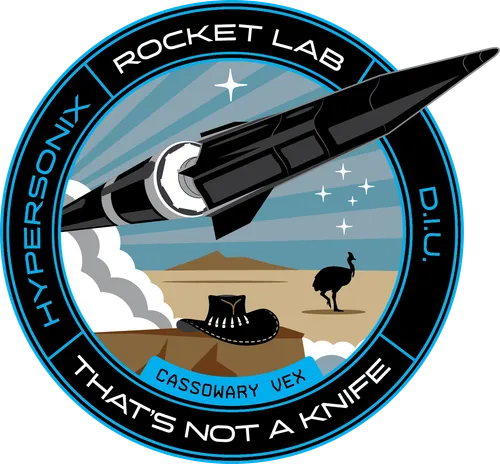
That's Not A Knife
Open the mission profile for patch, manifest, and vehicle detail.
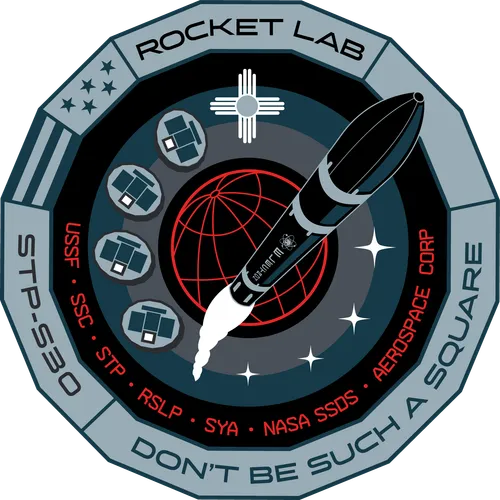
Don't Be Such A Square
Open the mission profile for patch, manifest, and vehicle detail.
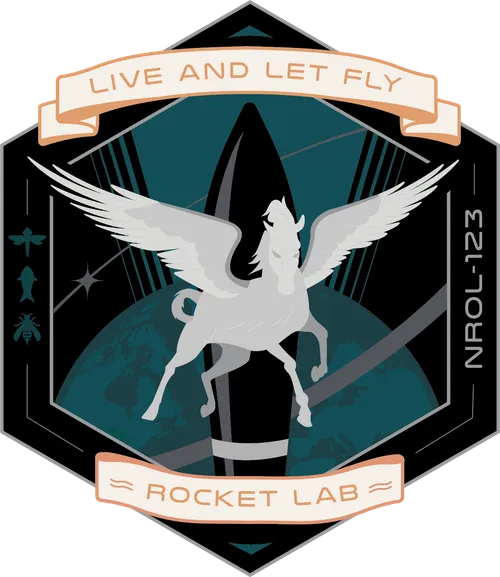
Live and Let Fly
Open the mission profile for patch, manifest, and vehicle detail.
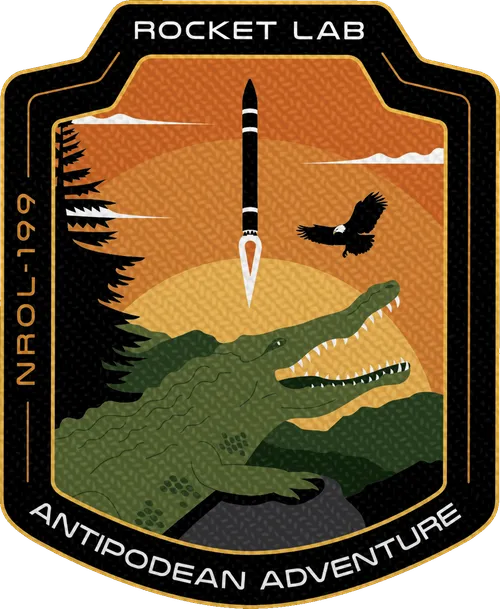
Antipodean Adventure
Open the mission profile for patch, manifest, and vehicle detail.
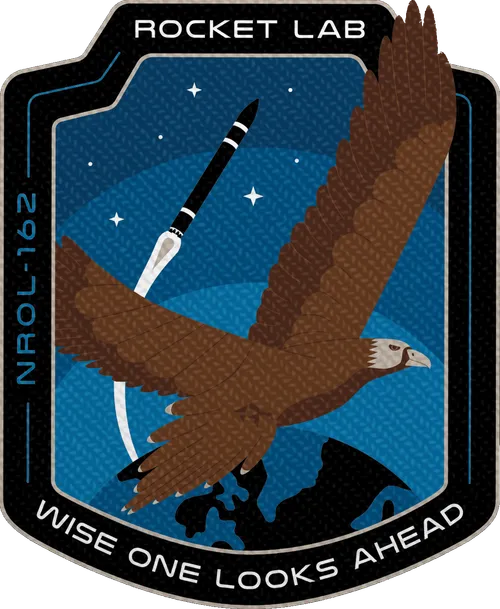
Wise One Looks Ahead
Open the mission profile for patch, manifest, and vehicle detail.
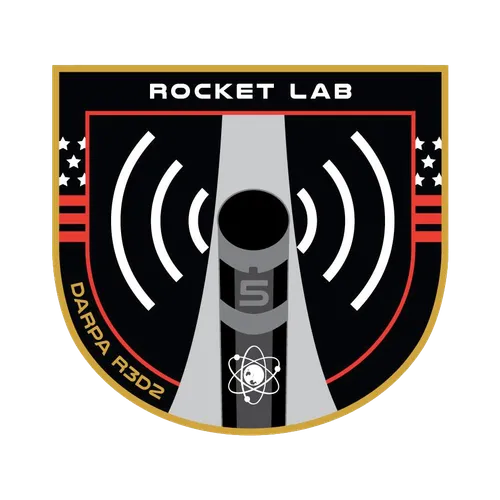
Two Thumbs Up
Open the mission profile for patch, manifest, and vehicle detail.